put good out, get good back
The 30-day kindness challenge.
Think of it as an experiment in karma. For 30 days, take every chance you get to be kind, all day. Each night, write down what you did and anything that came back. Read it all back on day 30 and see for yourself.
No purchase needed. Use the free journal app or a notebook.
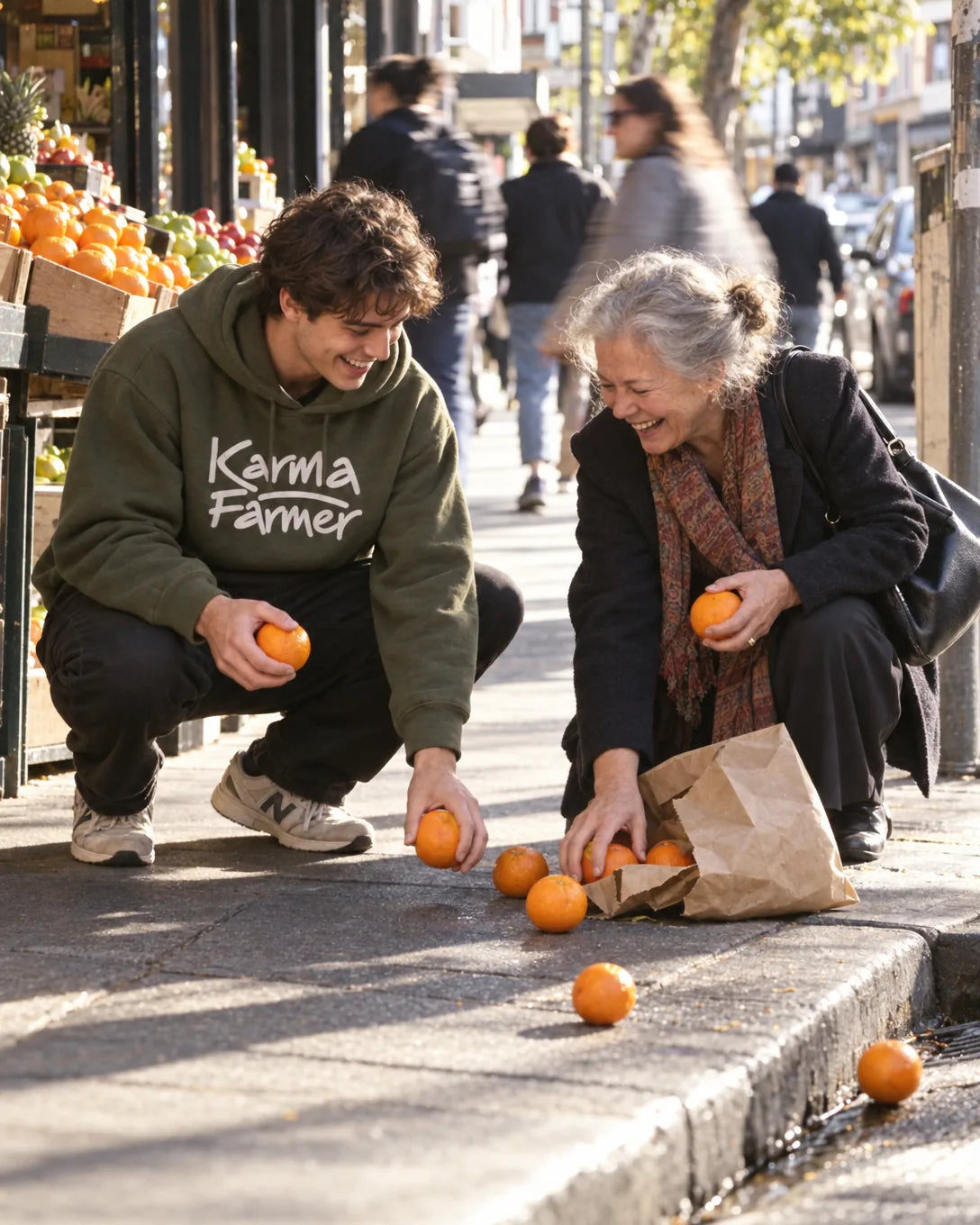
pick up the oranges
the idea in a minute
Karma, on purpose.
In everyday use, karma is the idea that what you put out comes back to you. Most people leave it to chance.
A karma farmer doesn't. Like any farmer, they plant on purpose: they go looking for chances to do good, all day. Then they keep an eye on what grows.
That's karma farming. The 30 days are the experiment: go all in, write down anything that comes back, and make up your own mind.
why bother
What we've seen.
When people go all in, we've seen more good come back than you'd expect. That's our experience, not a promise.
It comes back from surprising places.
Sometimes from someone other than the person you helped, later, when you least expect it.
It gets passed on.
People who receive kindness are more likely to pass it on, so one act can travel further than you'll ever see.
It probably means more to them than you think.
People tend to underrate how much a small kind act means to the person on the other end.
You may start seeing more of it.
Once you're looking for chances to help, you might notice more of the good that's already around you.
Sources
We can't tell you what'll come back or when, and some days nothing will.

Karma Overload.
An example paper tracker, one mark for each kind thing.
Karma Overload is what the 30 days are for: doing so much good, so often, that it starts coming back faster than you can write it down.
We've seen it happen. We can't promise it'll happen for you, or when, or what it'll look like. The journal is how you'll find out.
Start your 30 daysHow it works.
Start today.
Sign up for the free journal, or grab a notebook. You don't need to buy anything.
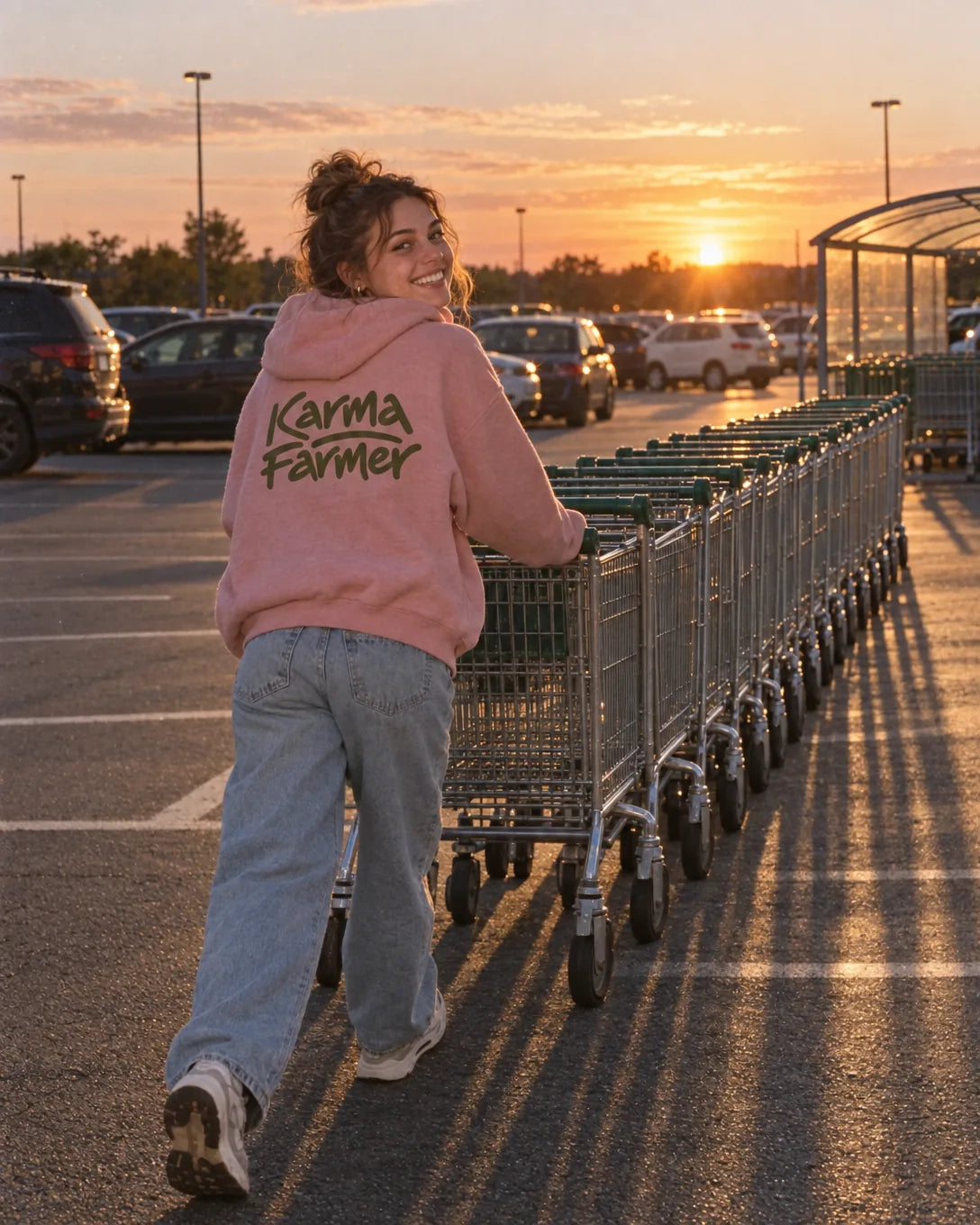
walk them back Take every chance.
All day, look for chances to do something kind and take as many as you can. There's no quota and no minimum.
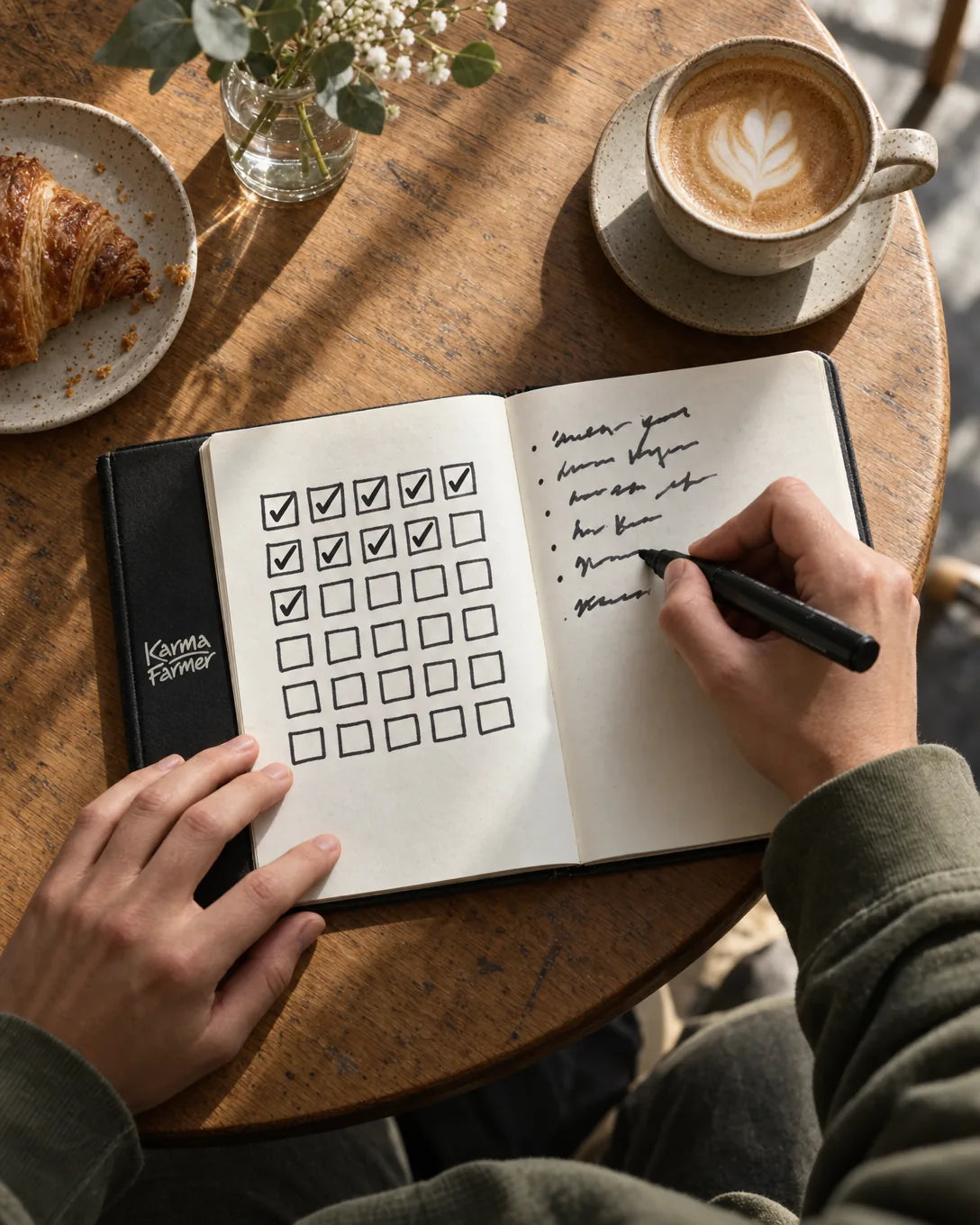
a line is plenty Log it tonight.
Two minutes: what you did, and anything that came back to you or got passed on.

read it all back Read it back on day 30.
Look at what you did and anything that came back. That's how you'll know if you've hit Karma Overload.
What counts.
At home
- Cook for someone who's flat out.
- Do the job nobody wants.
- Call the person you keep meaning to call.
- Leave a note that says thanks.
At work or uni
- Help someone finish on time.
- Give credit out loud.
- Introduce two people who should meet.
- Bring the new person to lunch.
Out and about
- Carry something heavy.
- Walk the trolleys back.
- Let someone in at the merge.
- Give up your seat.
Online
- Reply to the message you've been avoiding.
- Leave a real review for a small business.
- Answer a stranger's question properly.
- Send the compliment you'd normally keep to yourself.
If it makes someone's day better and costs you something, whether that's time, effort, attention or a bit of money, it counts.
House rules.
- No quota.Do as many as you can find.
- No streaks.Miss a day and keep going. Nothing resets.
- Private by default.Your journal is yours. Share a story only if you want to.
- Ask first.Don't film or post the people you help without their say-so.
- Free.You never have to buy anything to take part.
- Your call.What karma means is up to you. We'll never tell you good luck was earned or bad luck deserved.
Questions.
Is it really free?
Yes. The challenge, the journal and the reminders are free. We make clothes, but you don't need them to take part.
What if nothing comes back?
Some days nothing will, and that's worth writing down too. We don't promise what comes back or when. Either way, you'll have spent 30 days making other people's days better.
Is this a religious thing?
No. We use karma in its everyday sense: what goes around comes around. There are ordinary reasons kindness can come back. People remember who helps, they pass it on, and you start noticing more. None of it's guaranteed. Karma means much more in several faiths, and we don't claim to speak for them.
Is there any research behind it?
Some. Studies have found that doing kind things tends to lift your own mood a little, that people underrate how much their kindness means to others, and that people who receive kindness are more likely to pass it on. The effects are small and they're averages, so treat your 30 days as your own experiment.
Curry and colleagues, 2018; Kumar and Epley, 2023; Chancellor and colleagues, 2018How many kind things do I have to do?
As many as you can find. There's no quota. Some days that'll be two, some days twenty.
Why 30 days?
It's long enough to try this properly and short enough to finish. Nothing magic happens on day 30. Habits usually take about two months to feel automatic, so treat day 30 as a checkpoint, and keep going if you like it.
What if it feels awkward?
It tends to go better than people expect. In experiments, people who wrote thank-you notes overestimated how awkward the other person would feel. Commuters asked to chat with a stranger had a better trip than those who kept to themselves. People had predicted the opposite.
Kumar and Epley, 2018; Epley and Schroeder, 2014Do I have to use the app?
No, a notebook works. The free journal app keeps your notes private, gives you ideas when you're stuck and tracks your 30 days.
Can I do it with friends?
Yes, and it's better that way. You'll spot more chances when everyone's looking. You can invite them from the journal app.
What happens after day 30?
Read it all back. Then keep going, start another 30, or pass it on to someone else.
Start your 30 days today.
Grab a notebook, and your first day starts now. The free journal app isn't open yet.